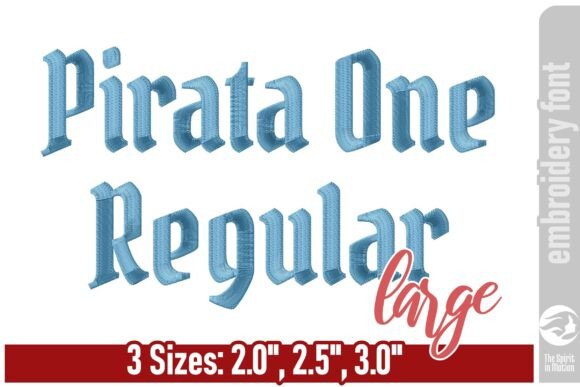
Pirata One Blackletter Font - Large: Strategic Application in Embroidery Design
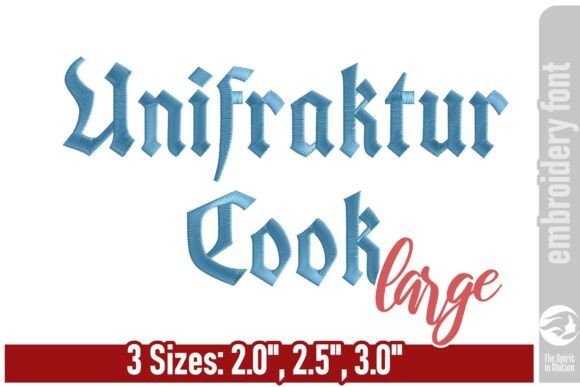
Selecting the correct typeface for machine embroidery is a strategic decision that extends far beyond simple aesthetics. The Pirata One Blackletter Font - Large represents a specific intersection of historical typography and modern digitization, offering creators a tool to establish distinct brand positioning and visual hierarchy. Unlike standard sans-serif or script fonts often defaulted to in commercial embroidery, this blackletter typeface carries significant semiotic weight. It communicates heritage, authenticity, and boldness, making it a high-value asset for entrepreneurs, merchandisers, and designers who need their textile products to stand out in a saturated market.
This font set is not merely a decorative overlay; it is a functional design element engineered for stitch performance at larger scales. When integrated intentionally into your production workflow, Pirata One supports clearer communication of brand values and enhances the perceived value of custom apparel and accessories. However, leveraging such a stylized font requires a thoughtful approach to planning, fabric selection, and customer expectation management to ensure the final embroidered product aligns with professional standards.
Strategic Positioning Through Historical Typography
In the context of merchandise and custom branding, typography acts as a non-verbal cue that sets consumer expectations before they read a single word. The Pirata One Blackletter Font - Large draws directly from traditional blackletter lettering, a style historically associated with craftsmanship, academia, and maritime tradition. For businesses operating within niche markets—such as historical reenactment, craft brewing, tattoo artistry, or heritage fashion—this font serves as an immediate signal of authenticity.
Using this typeface strategically allows you to differentiate your offerings from competitors relying on generic clip-art aesthetics. When a customer sees a monogram or business name rendered in Pirata One, they associate the product with a specific era and level of detail. This is particularly effective for creating striking monograms and names where legibility must be balanced with artistic flair. The inclusion of both uppercase and lowercase letters provides necessary versatility, allowing for proper title casing and sentence structure rather than forcing all-caps compositions that can appear aggressive or unrefined.
For marketers and small business owners, this distinction is crucial. It transforms a standard promotional item into a collectible piece of branded merchandise. The "pirate-inspired" aesthetic mentioned in the product description should be viewed through a broader lens of "adventure" and "tradition," making it applicable to outdoor brands, festival vendors, and artisanal makers who wish to evoke a sense of timeless durability.
Operational Considerations for Large-Scale Digitization
The designation "Large" in Pirata One Blackletter Font - Large is a critical operational parameter. In machine embroidery, scaling is not linear; increasing the size of a design changes the physics of thread tension, stabilizer requirements, and stitch density. This font set has been digitized specifically to maintain structural integrity at larger dimensions, which mitigates common production risks associated with resizing standard fonts.
When planning production runs involving this font, consider the following operational factors:
- Stitch Count and Production Time: Blackletter fonts typically feature varying stroke widths and intricate serifs. At large sizes, this translates to higher stitch counts compared to block letters. Accurate quoting for custom work must account for the increased machine run time and thread consumption inherent to this style.
- Fabric Compatibility: The bold nature of Pirata One requires a stable substrate. While ideal for heavy canvas, denim, leather, and twill, it may overwhelm lightweight knits or performance fabrics. Strategic material selection prevents distortion and ensures the crisp edges characteristic of quality blackletter embroidery are maintained.
- Hooping Strategy: Large format lettering demands precise hooping. Because the font features sharp angles and defined terminals, even minor shifting during the stitch-out process becomes glaringly obvious. Utilizing appropriate adhesives and stabilizers is not optional but a prerequisite for maintaining the font’s intended geometry.
Understanding these technical constraints allows for better project planning and reduces waste. By respecting the physical limitations and requirements of the Pirata One Blackletter Font - Large, creators can ensure consistent quality across diverse applications, from jacket backs to tote bags.
Data-Driven Planning and Resource Management
Efficient workflow management relies on accurate data. A significant advantage of this specific download is the transparency regarding sizing and stitch information. The provided summary for the letters “A” and “a” serves as a baseline metric for estimating resource allocation. However, strategic planning requires looking beyond the sample.
Before committing to a bulk order or a complex custom commission, it is imperative to consult the full dimension details available via the More Sewing Info PDF. This document contains specifications for all 156 letters in the set. Accessing this granular data enables several key planning activities:
- Accurate Cost Modeling: Stitch counts vary significantly between characters. An “M” or “W” in blackletter consumes considerably more thread and time than an “I” or “L.” Using average estimates can erode profit margins. Referencing the specific data for each character in your design allows for precise costing.
- Layout Optimization: Knowing the exact width and height of each glyph helps in arranging text to fit designated print areas without guesswork. This prevents last-minute resizing that could compromise stitch quality or violate safety margins on garments.
- Inventory Forecasting: Detailed stitch counts allow for accurate thread consumption calculations, ensuring you have sufficient stock for large runs without over-ordering.
Treating font specifications as operational data rather than mere technical trivia elevates the professionalism of your embroidery business. It shifts the focus from reactive problem-solving to proactive quality assurance.
Risk Mitigation and Contextual Awareness
While Pirata One Blackletter Font - Large is a powerful design tool, its misuse can lead to poor outcomes. The primary risk lies in applying this highly stylized font without considering readability and context. Blackletter is inherently dense; when used for long strings of text or at sizes near the lower threshold of legibility, it can become difficult to decipher. This defeats the purpose of communicative embroidery.
To mitigate this risk, adhere to the principle of intentional contrast. Pair Pirata One with simpler, cleaner typefaces for secondary information. Use the blackletter for headlines, initials, or short impactful words, and reserve sans-serifs for dates, locations, or taglines. This hierarchy guides the viewer’s eye and ensures the message is absorbed quickly.
Additionally, consider the cultural connotations of blackletter. While versatile, it carries specific historical baggage. Ensure the aesthetic aligns with your target audience's sensibilities. What reads as "heritage" to one demographic might read as "dated" or "inappropriate" to another. Conducting a small test run or seeking feedback from a representative sample of your customer base can prevent costly misalignment between your branding and market perception.
Enhancing Customer Experience Through Intentional Design
Ultimately, the goal of incorporating specialized assets like Pirata One Blackletter Font - Large is to enhance the end-user experience. Customers seeking custom embroidery are often looking for personalization that feels bespoke rather than mass-produced. The complexity and historical resonance of this font deliver that feeling of exclusivity.
When consulting with clients, use this font as a conversation starter about their brand identity or personal style. Explain why this specific lettering choice suits their project better than a standard option. Educating the client on the intentionality behind the design builds trust and justifies premium pricing. It demonstrates that you are not merely a technician operating a machine, but a designer making informed choices to achieve their goals.
Furthermore, the durability of well-digitized blackletter contributes to long-term customer satisfaction. The dense stitching patterns typical of this style, when executed correctly on appropriate fabrics, create a textured, raised surface that wears well over time. Unlike printed designs that fade, this embroidery maintains its presence, reinforcing the brand or memory attached to the item for years. This longevity is a key selling point for sustainable fashion advocates and consumers tired of disposable goods.
Making the Decision to Implement
Deciding whether to integrate Pirata One Blackletter Font - Large into your library should be based on a gap analysis of your current capabilities. If your portfolio lacks strong typographic variety or if you frequently receive requests for vintage, gothic, or maritime themes that you cannot currently fulfill professionally, this asset fills a tangible void.
However, acquisition is only the first step. Mastery comes from testing. Create sample swatches on various fabrics to understand how the font behaves under different tensions. Experiment with color combinations that enhance the gothic flair without reducing contrast. Build a reference library of successful applications so you can make faster, more confident decisions during future projects.
By approaching this font with a mindset focused on strategy, operations, and user experience, you transform a digital file into a reliable business asset. The result is not just beautiful embroidery, but a more resilient, differentiated, and professional creative practice.